Police Portal
BSN can share incident reports with a victim’s local police force — but only the reports a victim has explicitly consented to share, and only with the force covering the postcode district the incident happened in. This page covers both sides: the force’s view, and the victim’s consent controls.
For the legal and policy background (DPIA, lawful basis, retention), see docs/police-partnership/ in the repo — those documents are drafts pending legal review and aren’t yet published on this site.
Consenting to share (victim side)
Section titled “Consenting to share (victim side)”When reporting an incident on the Community Map, a victim can opt in to share it with their local force. Consent isn’t required to submit a report — it’s an extra step for anyone who wants police visibility beyond whatever they’ve already reported through 101/999.
Once consented, the victim gets a thread view for that incident:
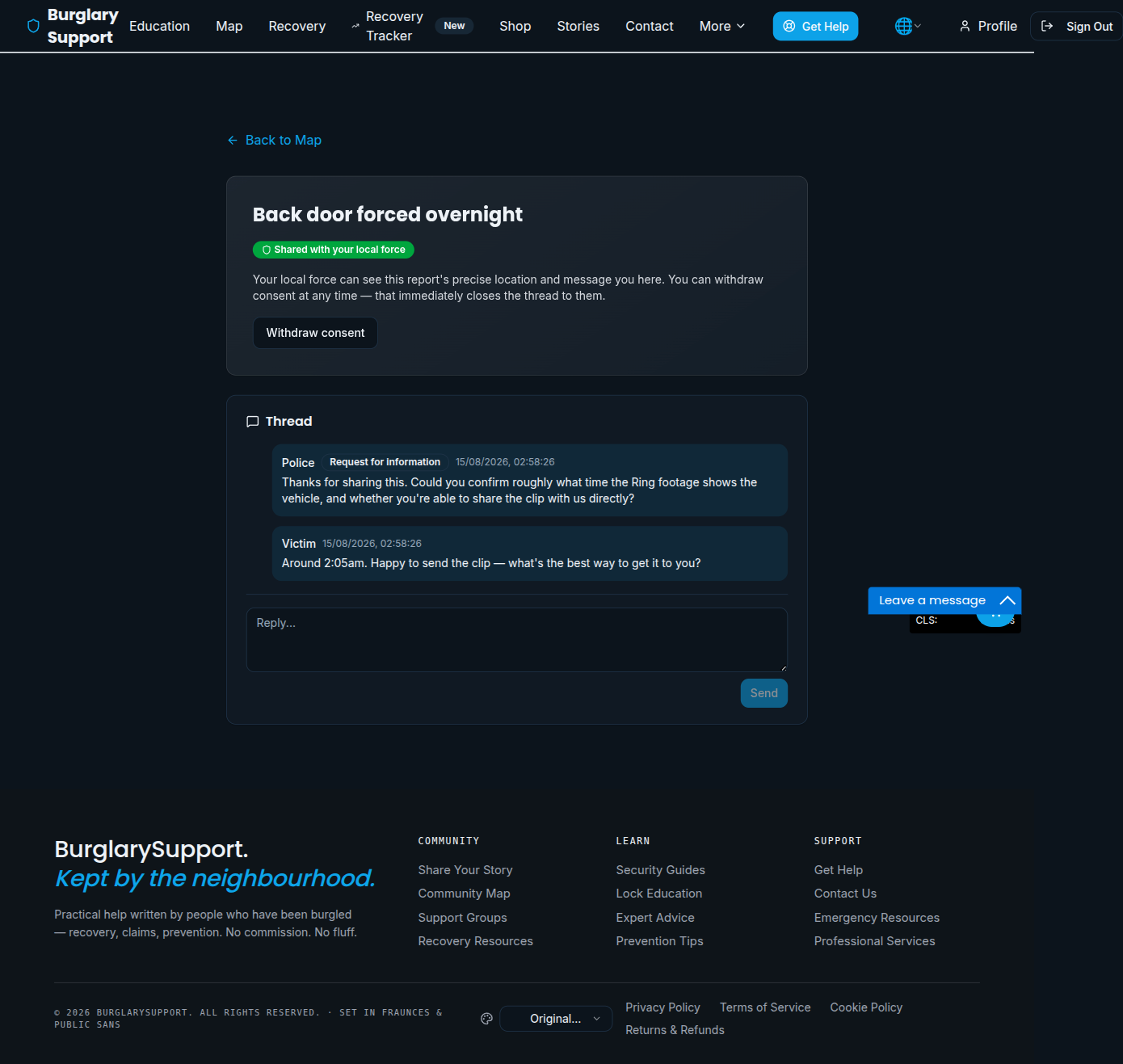
From here, a victim can:
- See the consent state clearly (Shared with your local force)
- Withdraw consent at any time — this immediately closes the thread to the force; they lose access to the precise location and message thread going forward
- Read and reply to any requests for information the force has sent
Force accounts
Section titled “Force accounts”Police users are assigned the police role by a BSN admin (see Admin Panel → Managing users), along with a specific force. That force’s covered_postcode_districts scope everything a police account can see — a force cannot query or browse incidents outside its own area, regardless of consent.
Force dashboard
Section titled “Force dashboard”Signed-in police users land on their force’s dashboard:
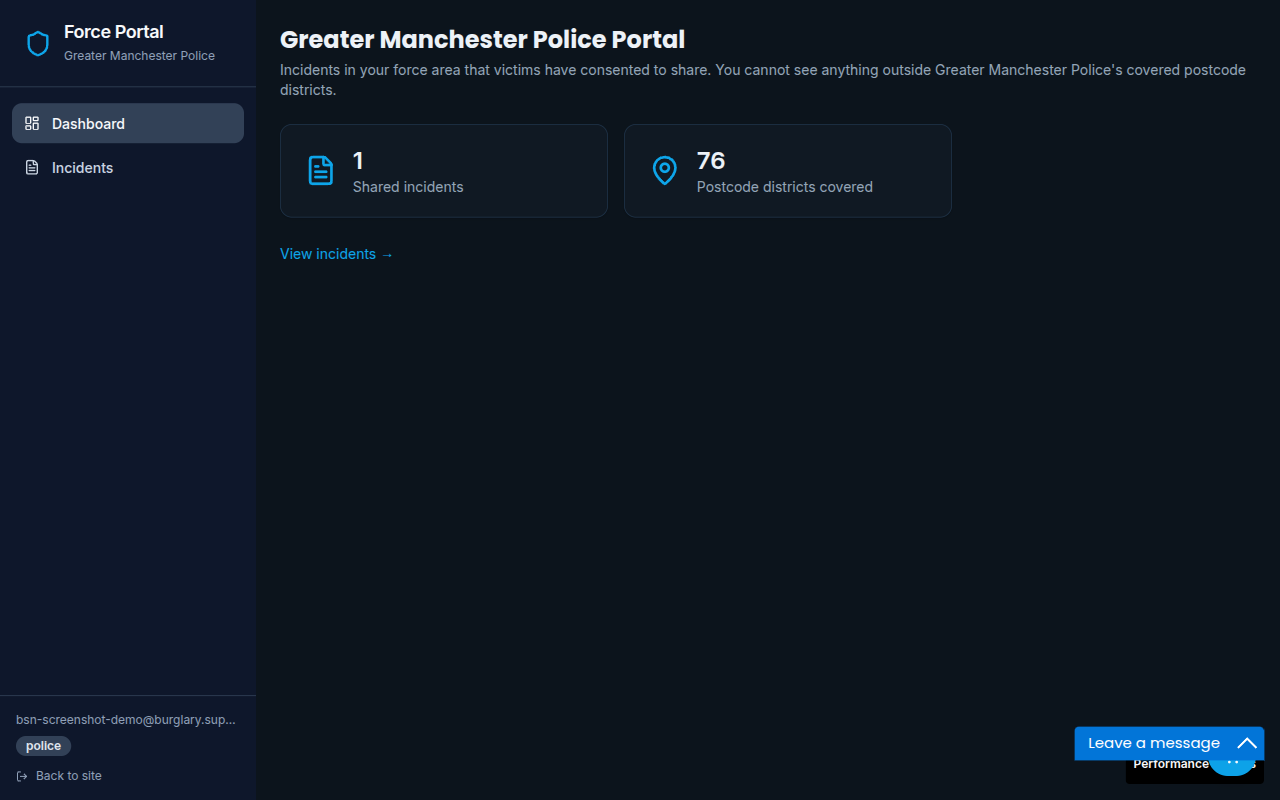
It shows how many incidents have been shared with consent, and how many postcode districts the force covers. View incidents goes to the list of shared incidents.
Incident detail and thread
Section titled “Incident detail and thread”Opening an incident from the list shows the report as the victim submitted it — location, date, method of entry, whether it was already reported to police, and any notes the victim left specifically for police — plus a two-way thread:
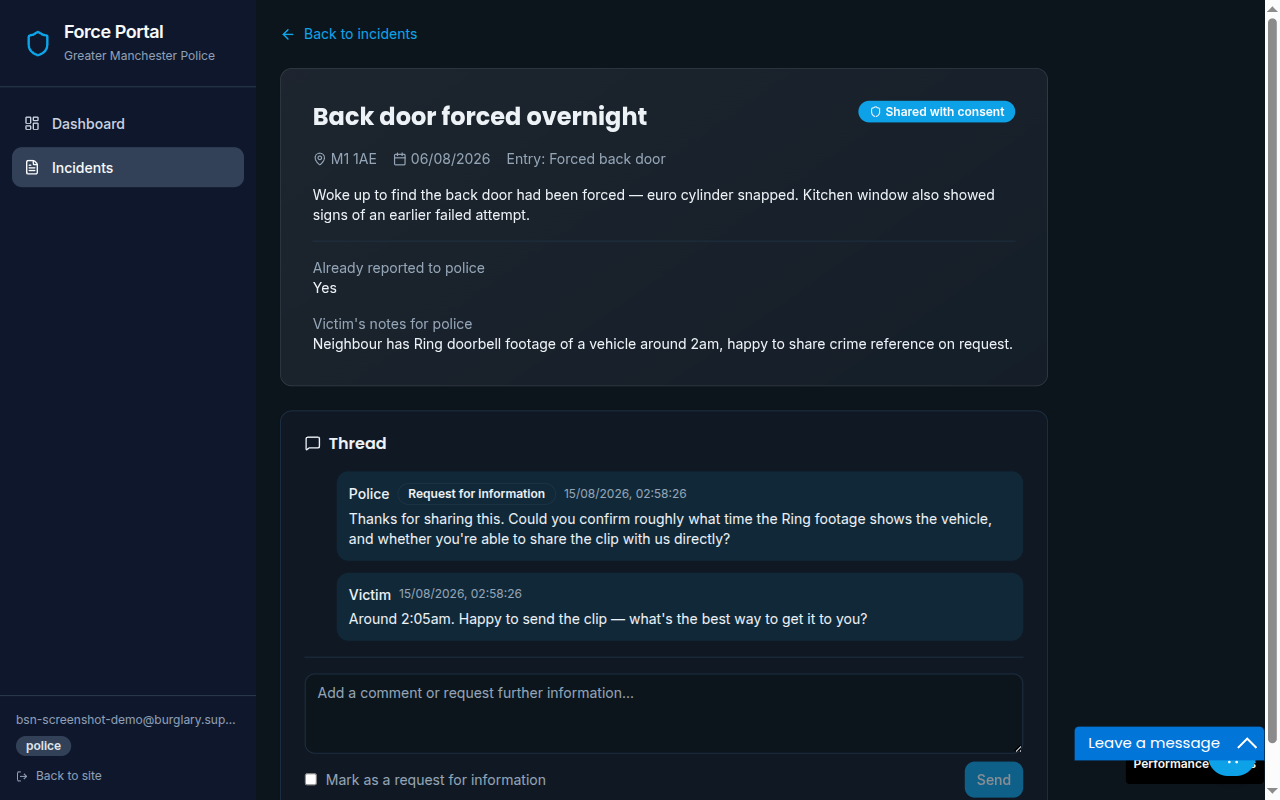
Officers can post into the thread, optionally marked as a request for information, and the victim sees and can reply to these in their own thread view (above). There’s no separate messaging system to check — it’s the same thread on both sides.
If a victim withdraws consent, the incident drops out of the force’s list and the thread closes to them; the victim retains their own copy of the conversation.